

Sleep Apnea
Also known as: sleep apnea, obstructive sleep apnea, OSA
What is sleep apnea?
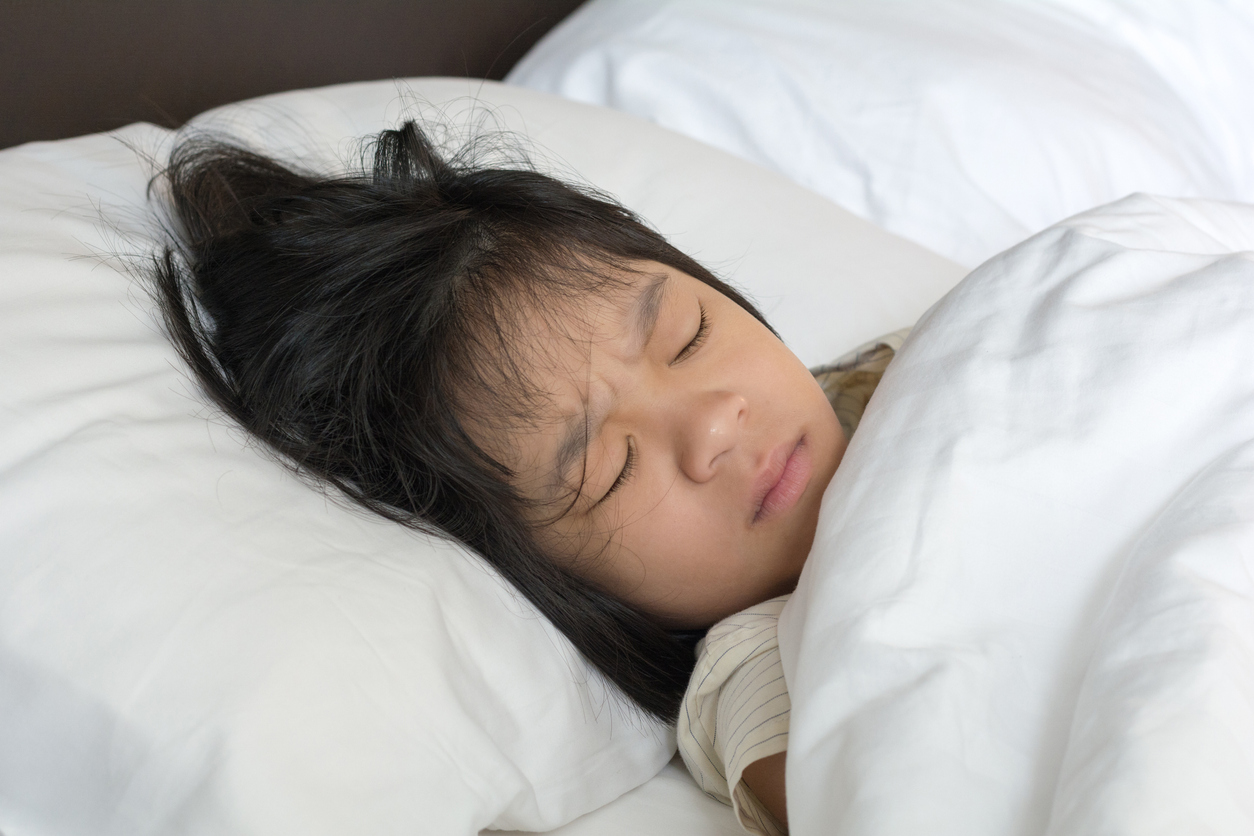
Sleep apnea is a disorder in which breathing is blocked and interrupted for periods of 5 to 10 seconds or more while sleeping.
What is pediatric obstructive sleep apnea?
Obstructive sleep apnea (OSA) is characterized by repetitive periods of breathing cessation (apneas) or recurring incidences of shallow breathing during sleep.
What are the signs/symptoms?
- Snoring or loud breathing during sleep
- Restless sleep
- May awaken frequently throughout the night
- Enuresis or bedwetting
- Sleeping in odd positions or with their mouth open
- Headaches
- Difficulty concentrating
- Depression
- Frequent respiratory tract infections
- Changes in personality or development
What causes sleep apnea in children?
The cause of sleep apnea in children is typically an enlargement of the tonsils and/or adenoids. Children with other disorders, such as craniofacial anomalies, cerebral palsy, muscular dystrophy and Down Syndrome are at an increased risk for sleep apnea.
How is sleep apnea diagnosed and treated?
At Nicklaus Children’s Sleep Disorders Center, pediatric sleep apnea is diagnosed through a sleep study. In most cases, tonsillectomy and adenoidectomy in children with obstructive sleep apnea will correct the problem. Positive-pressure ventilation (CPAP) is an alternative to further surgery in children with unresolved obstructive sleep apnea after a tonsillectomy and adenoidectomy.
Reviewed by: Jack Wolfsdorf, MD, FAAP
This page was last updated on: 5/1/2026 4:23:46 PM
Infectious Diseases
The Division of Infectious Diseases at Nicklaus Children’s Hospital uses state-of-the-art diagnostic tools to identify acute or chronic viral and bacterial diseases, so that we can treat it effectively as quickly as possible.
Learn MoreSleep Disorders Center
We offer sleep studies for pediatric sleep disorders as well as diagnosis, management, and research of sleep disorders in children and adolescents.
Learn MoreRelated Clinical Trials
Related Health Articles
Use the symptom checker tool to check how serious your symptoms are, if a healthcare visit is needed, and what steps you can take to relieve your symptoms at home.