


Patent Ductus Arteriosus (PDA)
Also known as: PDA, persistent ductus arteriosus.
What is Patent Ductus Arteriosus (PDA)?
Patent ductus arteriosus is a heart condition that affects some babies soon after birth. Before birth the ductus arteriosus is the blood vessel that carries most of the body’s blood that flows to the heart, through the pulmonary artery to the aorta which in the fetus takes the blood to be oxygenated by the mother's placenta. Normally after a baby is born, the lungs fill with air, and the ductus arteriosus closes, as it is no longer needed. However, in some babies, the vessel remains open and causes abnormal blood flow between the aorta and pulmonary artery which puts a strain on the baby’s heart. This is patent ductus arteriosus.
What causes patent ductus arteriosus?
Doctors aren’t exactly sure what causes patent ductus arteriosus, and often there is no clear cause. It is more common in girls and premature babies. Certain other conditions, such as Down syndrome or other heart defects, make patent ductus arteriosus more likely, so genetic & environmental factors may play a role.
What are the symptoms of patent ductus arteriosus?
Babies with patent ductus arteriosus may be short of breath, have rapid breathing or heartbeat, get tired easily, have trouble feeding or not grow well. They may also have no symptoms.
What are patent ductus arteriosus care options?
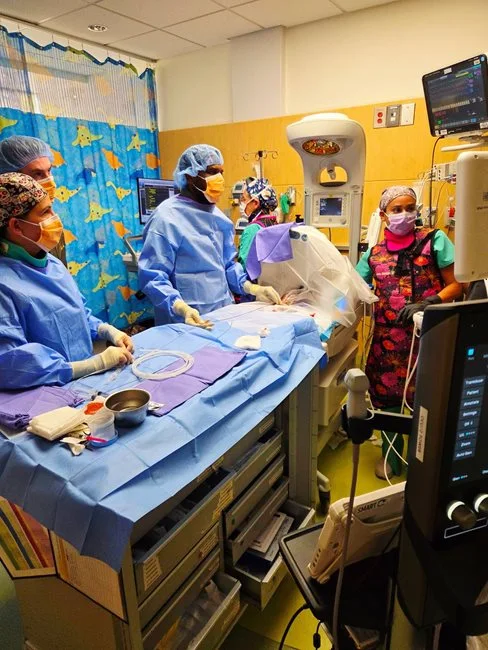
Depending on its severity, patent ductus arteriosus can be treated with medication, surgery, or transcatheter closure.
Reviewed by: Jack Wolfsdorf, MD, FAAP
This page was last updated on: 4/22/2026 1:40:34 PM
Heart Institute
The Heart Institute – a world leader in pediatric cardiology and cardiovascular surgery and the care of children with congenital heart disorders – serves as a beacon to families confronting the reality of a child or newborn with a heart defect.
Learn MoreCardiac Catheterization Laboratory
Recognized as a world leader in interventional cardiac catheterization. Our Cath Lab utilizes the latest innovations in imaging and catheter device technologies, our philosophy of high-tech meets high-touch is evident in every aspect of care.
Learn MoreRelated Clinical Trials
Related Press Releases
Use the symptom checker tool to check how serious your symptoms are, if a healthcare visit is needed, and what steps you can take to relieve your symptoms at home.
Inspiring Patient Stories
 Tiny but Mighty: 1.2LB Baby Girl Leaves NICU After Three Months
Just a few days after baby girl Pierson was born, when she still weighed only 1.2 lb, a small catheter was placed through her vein to deliver a tiny device to treat her congenital heart defect all while she remained in her incubator.